
Democratizing Prediction: When Knowing Changes What Comes Next
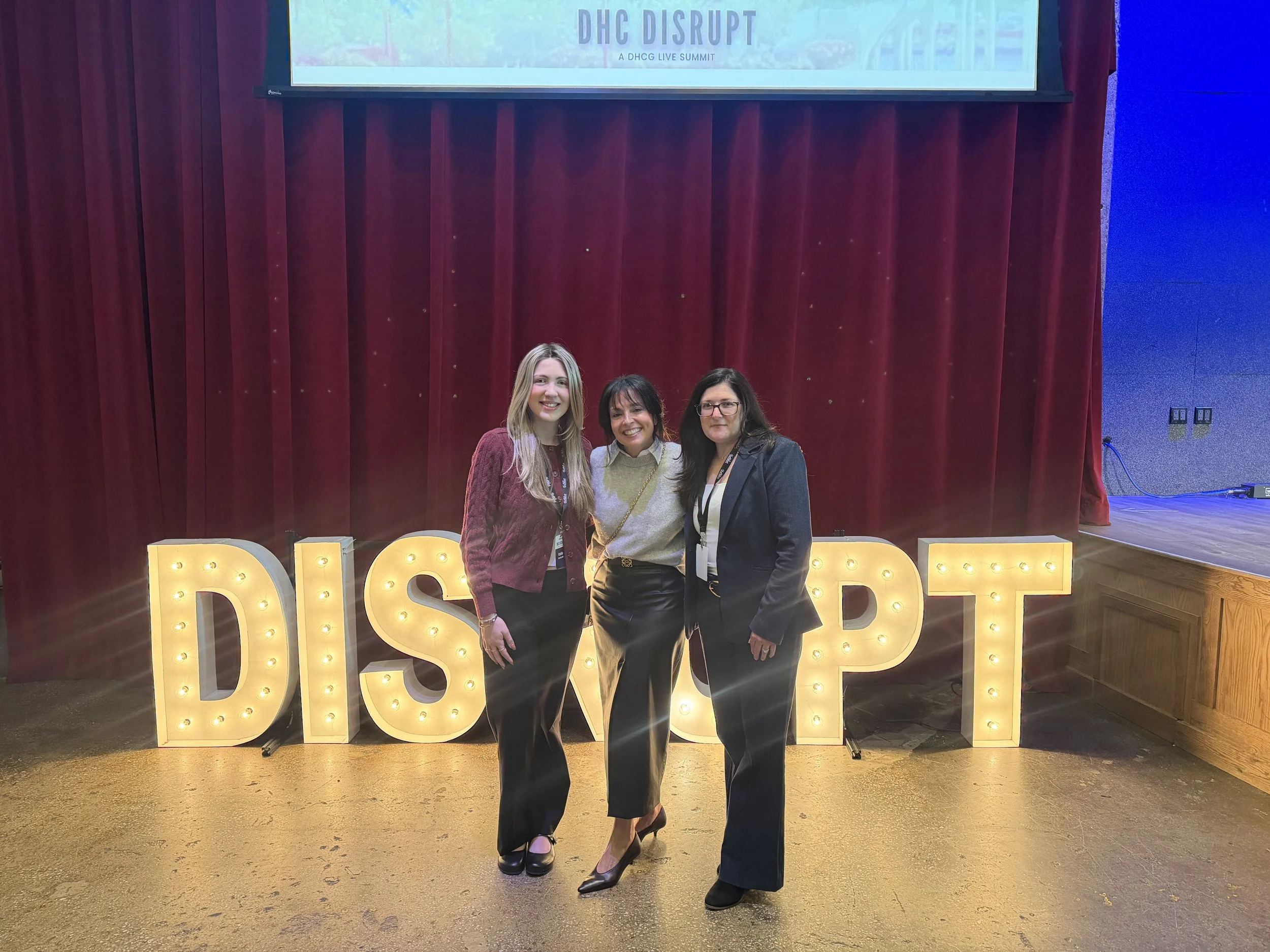
At DHC Disrupt 2026 in NYC, the conversations were largely centered on AI, transformation, innovation, and the future of healthcare. Yet one of the event's most resonant discussions focused on something far more human: the power of knowledge, self-advocacy, and lived experience to change what comes next.
Moderated by Allison Ceraso, Chief Creative Officer of Digitas Health, Democratizing Prediction: When Knowing Changes What Comes Next, brought together ovarian cancer survivor Katie Ventisette, Stefanie Taylor from the NOCC, and Dr. Scott Richard from Summit Health, for a powerful discussion about health literacy, prevention, and empowering women with the information they need to make informed decisions.
At the heart of the conversation was a simple but important idea: information only has power when people can understand it, access it, and act on it.
Rethinking What We Know About Ovarian Cancer
One of the session's most eye-opening moments came when Dr. Scott Richard challenged a longstanding assumption in women's health. "For more than 60 years, we've called it ovarian cancer, but we now understand that many of these cancers actually begin in the fallopian tubes."
The distinction matters. As Dr. Richard explained, a lack of awareness around this evolving science can leave patients without critical information and contribute to symptoms being overlooked, misunderstood, or dismissed. The conversation underscored the importance of bringing emerging scientific understanding out of academic circles and into everyday healthcare discussions.
For attendees, it was a reminder that education itself can be a form of prevention.
Trusting Yourself When Something Feels Wrong
While science provided the foundation, it was Katie Ventisette's personal story that brought the conversation to life.
Diagnosed with ovarian cancer at just 22 years old, Katie shared what it was like navigating symptoms in college, making difficulty fertility decisions, and the challenge of advocating for herself throughout her healthcare journey.
Her message to the audience was clear: trust yourself and trust what your body is telling you because you know it best. Reflecting on her own experience, Katie encouraged women to advocate for themselves, seek answers when something feels wrong, and not ignore their instincts when symptoms are dismissed or overlooked. Her advice was simple but powerful: "I'm glad I trusted myself, so that would be the main takeaway from my story."
That message resonated deeply throughout the room.
Following the session, attendees sought Katie out to thank her, share their own experiences, ask questions, and express how inspired they were by her openness and self-advocacy. Long after the panel ended, the conversations continued.
Turning "I Wish I Had Known" Into Action
Stefanie Taylor reflected on the impact of Katie's story and the opportunity to use lived experience to help others. "I commend Katie for sharing her story and changing the narrative from 'what I wish I had known' to 'because of what happened to me, I want others to know.'"
For Stefanie, that shift reflects the heart of the National Ovarian Cancer Coalition's (NOCC) mission. Too often, women are left without the education, awareness, or information they need to recognize symptoms, understand risk factors, or advocate for themselves within the healthcare system.
The work of NOCC is not simply about raising awareness of ovarian cancer. It is about equipping women and families with the knowledge that can lead to earlier conversations, better questions, and ultimately better outcomes. Katie's story illustrated exactly why that work matters. What began as a personal journey became a platform for helping others recognize signs, trust their instincts, and seek answers.
That perspective became a central theme of the discussion. Health literacy is not simply about providing information. It's about making that information meaningful, accessible, and actionable. Whether discussing family history, prevention, genetic risk, or symptom awareness, the panel challenged attendees to think about how we bridge the gap between knowledge and action.
The Conversations That Can Save Lives
Throughout the discussion, Allison Ceraso returned to the importance of having honest, sometimes difficult conversations about health. She closed the conversation with a call to action:
"Every story matters, and we just hope today even just one of you does one proactive thing to better your health. We talked a lot about women in this room, but men, you should do the same. Make sure your wives are on top of it and your daughters are screened. Have the tough conversations, because it can save a life."
It was a fitting takeaway from a session centered on advocacy, education, and empowerment.
What stood out most was the impact beyond the stage. This conversation brought a powerful human perspective to the agenda. In the sessions that followed, speakers referenced the importance of preserving the human element in an AI-first world, reinforcing just how deeply the discussion resonated.
From Awareness to Action
The conversation at DHC Disrupt was also a reflection of a broader commitment shared by Digitas Health and NOCC: helping more women access information that could change the course of their health journeys.
That commitment came to life through Silent InHERitance, a documentary created in partnership with NOCC that shines a light on the gaps in awareness, education, and understanding surrounding ovarian cancer. By elevating real stories and lived experiences, the film aims to spark the conversations that too often happen too late.
If there was one message that echoed throughout the panel, the film, and the conversations that followed, it was this: knowledge is only powerful when people have the confidence to act on it. When we help people better understand their health, ask informed questions, and advocate for themselves, we don't just change what they know. We can change what happens next.
Learn more about Silent InHERitance here.