Marketing That Matters: What Cannes Lions 2026 Made Clear

This year at Cannes Lions 2026, one thing was made clear: the future of marketing isn’t about louder messages, it’s about meaningful ones. Across panels, award winning works, and grounding conversations, a shift emerged: brands are moving from telling stories to creating impact.
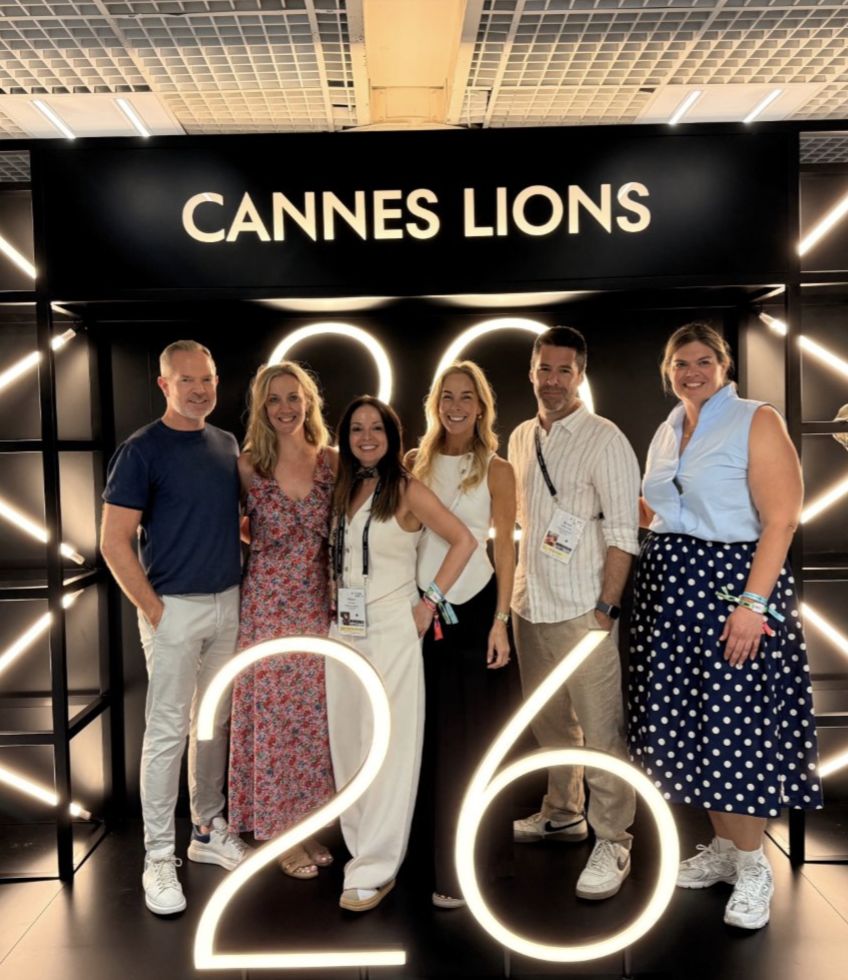
Our team on the ground at Cannes saw 6 themes that stood out:
1. Acts, Not Ads
The most powerful work didn’t feel like advertising at all, it instead showed up through action. Instead of brands just relying on messaging, they created tangible value in people’s lives through services, tools, or real-world impact. As Tiffany Rolfe of R/GA put it, “The most valuable creative work is no longer the thing you launch. It’s the thing that continues after you leave the room.” The proof was Ordinary’s Grand Prix in Health & Wellness that racked up a 4.6x engagement uplift, 5x follower growth, and an 11.8x surge in website traffic.
The idea this year at Cannes was that the most effective ideas weren’t defined by a moment, but by their ability to live on and make a lasting difference. Jury President Kainaz Karmakar called Ordinary’s campaign "more than deserving — undeniable." The lesson? Stop making ads. Start making things happen.
2. People Buy Into People
Audiences aren’t buying product, they’re buying belief. Audiences are increasingly drawn to real voices, not polished brand personas. From creators to patients to employees, the most resonant campaigns centered on human stories and lived experiences. Stella McCartney nailed it: the next generation "want to buy into something that has authenticity, has some kind of kindness at its core." Accenture Song CEO Ndidi Oteh pushed brands to go local and human: "Respect the ritual. Earn the moment. Embrace the culture. Don't reinvent it."
The Aspercreme campaign, The 58-Year-Old Rookie, was a prime example. By putting a real face to the idea and betting on a genuine human story over a polished pitch, Aspercreme came home with 1 Bronze and 5 Shortlists. The takeaway is simple and unforgiving — authenticity isn't a campaign tactic, it's the price of entry.
3. Expanding the Brand Experience
The boldest brands stopped playing it safe and started standing for something. Patagonia's Alex Weller didn't flinch: "The more clearly you state your values, the less universally acceptable you become. That is a trade-off you have to make." The work that resonated most didn’t aim for mass approval, but instead it aimed for meaning. Audiences want to know what a brand stands for, who it stands with, and what it’s willing to stand up for. And increasingly, they reward brands that are clear consistent, and courageous in those beliefs.
Enter Adidas' Supernova Adaptive (TBWA Toronto), a campaign that didn’t just market a product, but redefined access. Winning a Grand Prix, 2 Golds, and a Silver, the work was awarded for its intention about expanding who gets to run. The campaign advertised Adidas’ mission to design for athletes with disabilities, standing up for inclusion in sports. That’s what set it apart. As the jury noted, “creating is easier than ever, but creating change is not.” In an era where tools and technology have democratized content creation, the real differentiator is impact. It’s not about how much you can make, it’s about what difference it makes.
4. Bridging Clinical Need & Cultural Reality
The best health work met people where they already were, in culture. Instead of interrupting with messages, it integrated into moments people were already engaging with, making health feel less like an obligation but instead something more relevant and compelling. The shift from intrusion to integration was one of the clearest themes at Cannes.
Sir John Hegarty’s, Creative Director and Co-Founder of The Business of Creativity, challenge landed hard: marketers should "stop 'stalking' people and start 'inspiring' them,". For too long the healthcare industry has relied on urgency, fear, or repitition to drive behavior. So what if we borrowed the entertainment industry's gift for making us care about subjects we'd rather avoid. This strategy gives healthcare marketers the opportunity to not just inform but to engage.
Publicis Brazil's Donate to Play, which won 1 Gold and 2 Silver, proved that point exactly. The campaign transformed a traditionally clinical and often overlooked message into something culturally magnetic. By tapping into the universal appeal of play, it reframed participation not as a duty, but as something people wanted to be part of. It didn’t dilute the seriousness of the issue—it elevated it through relevance, emotion, and accessibility, turning a clinical message into something culturally irresistible.
5. Overcoming Regulatory Fear
In a category ruled by caution, courage stood out. For a longtime, healthcare marketing has operated within tight constraints, and for good reason. This year , it became clear that brands breaking through weren’t the ones avoiding those constraints, but navigating them boldly and with a willingness to push past fear.
The warning came from Orchard Creative's David Kolbusz, who cautioned that AI's pattern-chasing risks "a tsunami of the mediocre — the ultimate machine for producing the safe and the derivative." In today’s world, it is easier than ever to replicate what’s already been done. When everything starts to look the same, defaulting to “safe” doesn’t protect you, it erases you.
Viagra’s Make Love Last, winning 1 Gold and 1 Bronze, showed the antidote: brands that push past regulatory fear instead of hiding behind it. Rather than hiding behind regulatory complexity, the campaign leaned into it—finding a way to communicate a sensitive, highly regulated topic with honesty, nuance, and creativity. It didn’t shy away from discomfort; it used it as a catalyst to connect more deeply with its audience.
6. Humor And Experiential Won Hearts
Turns out the fastest way to a serious message is a laugh. For years, health marketing has leaned heavily on urgency, fear, and worst-case scenarios to drive behavior. But at Cannes this year, that approach was challenged head-on. “Doom and gloom is no longer working to get a message across,” said David Ohana, Jury President and Chief Communications & Marketing Officer at the UN Foundation—a striking admission from a category built on high stakes and serious subject matter.
What’s replacing it isn’t a lack of seriousness, but a shift in how that seriousness is delivered. Humor, when used well isn’t dismissing anything important, but it humanizes the message. It lowers defense, invites people in, and creates space for messages that might otherwise be ignored or avoided all together. In a world where audiences are constantly filtering out what feels heavy or overwhelming, a moment of levity can be the difference between being skipped and being remembered.
The proof was on stage. Novartis’ Relax Your Tight End took home a Grand Prix, a Silver, and two Shortlists by doing something deceptively simple: making people laugh. Instead of leaning into guilt or fear, the campaign used sharp, culturally fluent humor to reframe a sensitive health topic in a way that felt approachable and shareable. It met audiences on their terms, speaking in a tone they recognized and actually wanted to engage with.
Final Takeaways
Cannes 2026 made one clear signal: creativity wins when it stops selling and starts meaning something. Across all six takeaways, the throughline is a shift from ads to acts, from polish to authenticity, and from playing it safe to standing for something real. The award-winning work — Adidas' Supernova Adaptive, Aspercreme’s The 58-Year-Old Rookie, Novartis’ Relax Your Tight End — didn't interrupt culture, it moved through it, trading fear and doom for humanity, humor, and genuine change. The mandate for brands is unmistakable: state your values boldly, meet people where they already live, embrace local culture over global sameness, and measure success not by what you launch but by what keeps happening after you leave the room. In an age where AI makes creating easier than ever, the winners proved that creating change is the only thing that still counts.