
AI Isn't Coming for Healthcare Marketing. It's Coming for the Broken Parts
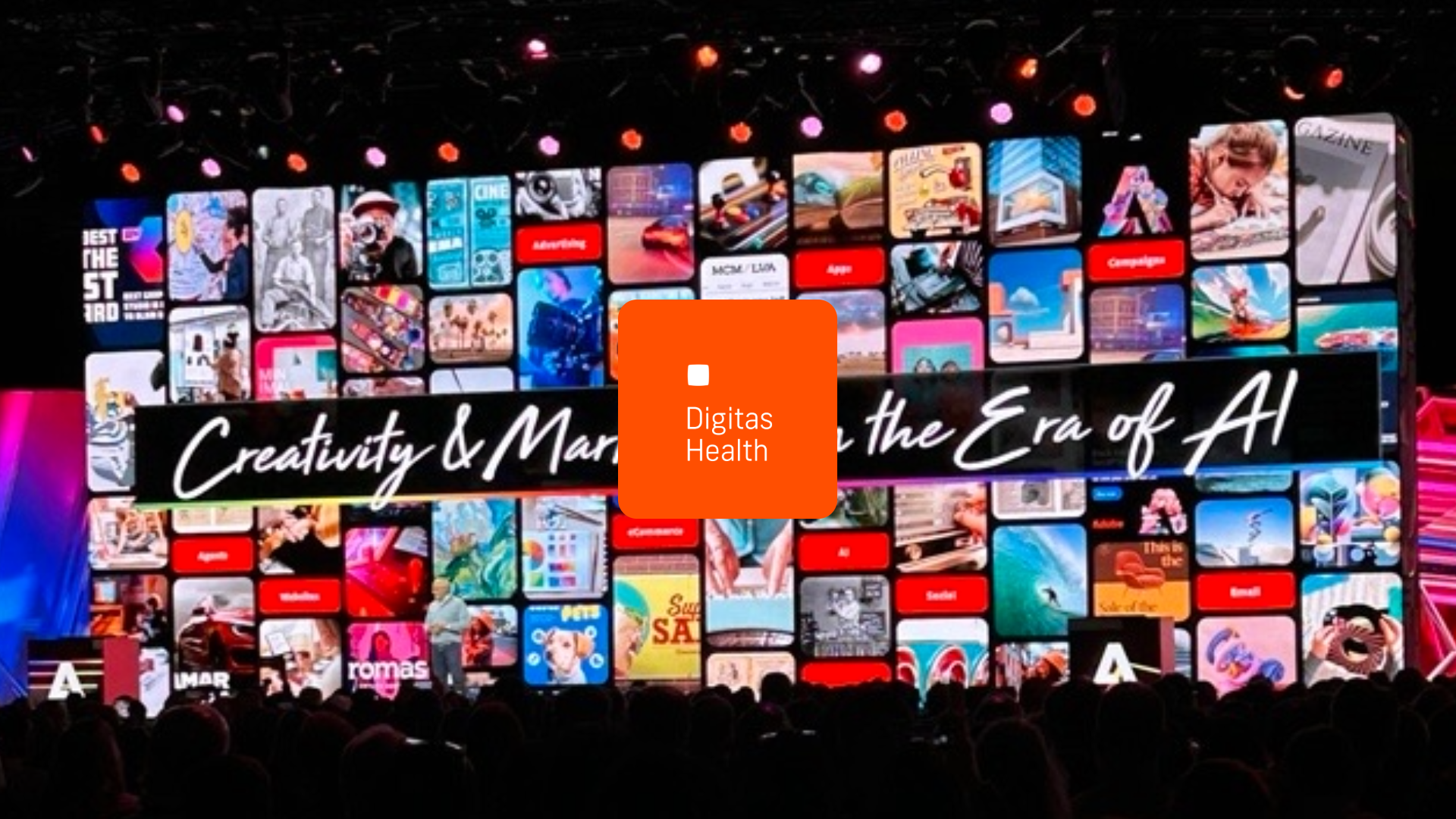
Jonah Martinson is SVP of Engagement Strategy at Digitas Health, part of Publicis Health. He is attending Adobe Summit 2026 in Las Vegas.
I'm on the floor at Adobe Summit 2026 and AI is everywhere. In every session title. Every demo. Every keynote moment. And if you work in healthcare advertising (like I do) there's a quiet voice in the back of your head asking the question nobody wants to say out loud: Is this the beginning of the end for us?
I want to answer that directly. No. But the version of us that survives this moment looks different from the one that walked in.
The fear is real. Let's name it.
Two fears are running through our industry right now. The first is about jobs: that AI will absorb the creative, strategic, and analytical work agencies have built entire teams around. The second is about budgets: that clients will question why they need us when AI can generate, optimize, and personalize at scale.
I've heard both this week. In sessions. In hallway conversations. In the subtext of every "AI-powered" demo on this floor.
But then the keynote stage told a different story.
Nvidia CEO Jensen Huang challenged the room: "Most people have this wrong. We're going to be busier than ever." Not one campaign executed cheaper, but hundreds of campaigns, experimenting and iterating at a scale that wasn't operationally possible until now.
Adobe CEO Shantanu Narayen grounded what that means for our craft: "Creativity is a uniquely human trait." AI expands what's possible. Humans decide what's meaningful.
For healthcare advertising, this isn't just an efficiency story. It's something more urgent.
In pharma, bad engagement isn't just wasted impressions.
When an HCP doesn't get the right clinical information at the right moment, a patient may not access a therapy that could help them. When a patient doesn't receive the right support, they fall off therapy. These aren't marketing metrics. These are health outcomes.
The "broken parts" AI is threatening aren't our craft or our strategic value. They're the rigid pre-scheduled journeys that were always imprecise. The siloed HCP and patient engagement that was never truly connected. AI orchestration fixes that, making context-aware, clinically relevant engagement possible in a way that wasn't feasible before. And behind every relevant moment is a strategy that a human built.
So what are we actually afraid of?
The agencies that struggle won't lose to AI. They'll lose to competitors who used AI to finally deliver what healthcare audiences always needed: the right message, at the right moment, in service of real health outcomes.
Creativity is still ours. Strategy is still ours. The scale to deploy both has never been—until now.
Sitting here at Adobe Summit, I'm not afraid of what AI means for our industry. I'm energized by what it finally makes possible.